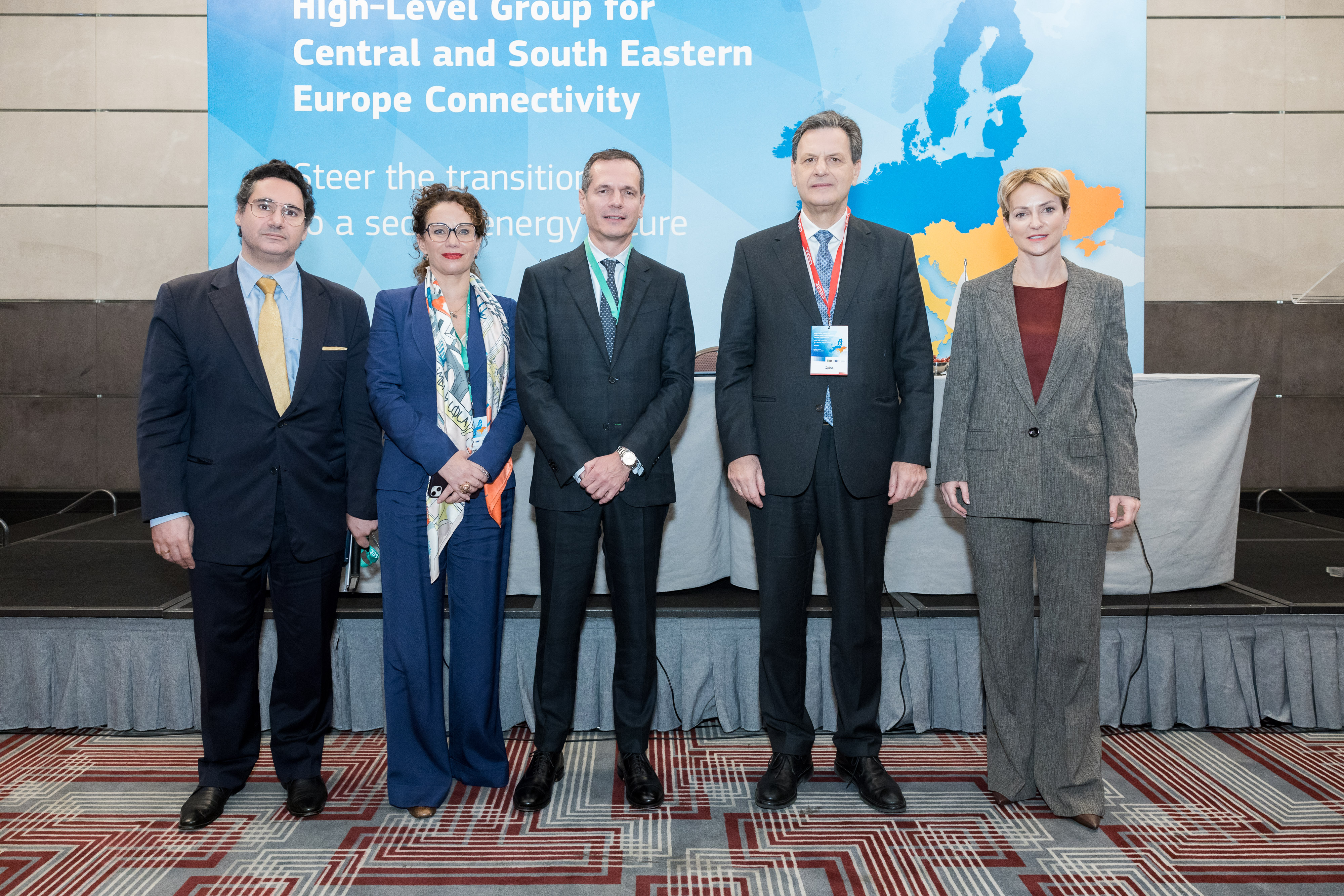
IPTO's Chairman and CEO, Manos Manousakis, presented the electrical interconnections that facilitate the integration of clean energy into the energy mix, enabling its transfer to Central and Eastern European countries and beyond. He emphasized the crucial role of these interconnections in enhancing the security of the continent's energy supply during his speech at the CESEC Ministerial Meeting—a key forum for energy connectivity in Central and Eastern European countries.
Manousakis highlighted the significance of the infrastructure implemented by the Greek Transmission System Operator in accelerating Greece's energy transition. He cited the example of last November, when over 60% of the country's energy consumption came from zero-carbon footprint sources (renewable energy sources and hydro). He specifically mentioned the positive environmental impact of domestic electricity interconnections, including island interconnections, which have already yielded substantial benefits and are expected to result in a 1.8% annual reduction in emissions by the end of the decade, in line with the Operator's Ten-Year Development Plan.
As he noted, domestic interconnections are one of the two pillars of the Operator's investment programme that promote the energy transition. The other is the cross-border interconnections that are underway, with Central and Eastern European countries and beyond, to the east. "We must not only make maximum use of our renewable energy potential, solar and wind (onshore and offshore) but also transfer the excess clean energy we produce from the production centres to the consumption centres," Manousakis said.
In this context, he made a special reference to the second electricity interconnection between Greece and Bulgaria - a project of Common European Interest included in the CESEC Priority Projects - which started operating last summer, substantially increasing the electricity transport capacity between the two countries and the stability of the network in the Balkan region. He also highlighted the importance of the second Greece-Italy interconnection which has been incorporated in the revised CESEC Action Plan for Electricity and RES and in the Development Plans of both IPTO and TERNA, the Italian Transmission System Operator, which when completed will triple the energy exchange capacity between the two countries, creating yet another necessary electrical corridor in the South of Europe, where the grid is weaker than in the North. At the same time, IPTO is maturing the second Ultra-High Voltage interconnection with Albania and plans to increase the transmission capacity on the existing interconnection with North Macedonia.
Mr. Manousakis also spoke about the Greece (Crete) - Cyprus - Israel Great Sea Interconnector, which will contribute to the export of green electricity from the CESEC countries to the Middle East, stressing that the construction of the cable section of the Crete-Cyprus leg has already started with a Notice to Proceed to the contractor Nexans and the powerful Greece-Germany Green Aegean Interconnector for which IPTO is in discussions with all countries that could potentially be involved in the project with a view to its rapid maturation. As he said, this project is linked to two other major projects in which IPTO is involved and are aimed at creating a major corridor extending from North Africa and the Middle East to the industrial heart of Europe through Greece, the Greece-Egypt GREGY interconnection, implemented by Elica of the Copelouzos Group, and the Greece-Saudi Arabia Saudi Greek Interconnection.
Finally, the head of IPTO highlighted the remarks made by European Commission’s Vice President Maroš Šefčovič from the Davos Forum on the need to create an Alliance of EU TSOs in order to achieve the EU's long-term climate goals.
"We need more interconnections in Central and South-Eastern Europe but also intercontinental interconnections between North and South and between East and West to optimise the use of renewable energy which is not always available when we need it. Therefore, we need to work together to overcome all the obstacles, administrative, regulatory, financial, to reap the benefits of a more extended and stronger regional electricity grid," he concluded.
 Dyrrachiou 89 & Kifissou, 104 43 Athina
 +30-210-5192101